Grief is a bitch

This week’s blog challenge prompt is “Read something somewhere? What are your views on it?” I was mulling that over and trying to decide what I have read lately that is blog-worthy, but for the past few weeks my reading has been for pleasure, and my reading pleasure is true crime because I am weird like that. I don’t think my readers are fans of body farms that study decomposition, so that wasn’t going to work. Then an incident happened early in the week that really chapped my ass. I sat with it for days, trying to decide if I want to get on my soapbox or not. It is now Sunday morning and yep, it’s still grinding my gears. So here I go, climbing up on that box.

There’s just no getting around it–losing someone hurts. But do you know what makes the experience even worse? Gatekeepers. I don’t know what makes people think they have a God-given right to give people permission to grieve the loss of someone or yank that permission away, but they exist.

Maybe it is because my parents taught me that the extent of my ability to control others ends with myself. I don’t have to like what others choose to do, but when it comes to making sure something does or does not get said or done, I can only 100% control me and everyone else has to govern themselves and we can only hope they make good decisions. I can offer suggestions. I can lay out the pros and cons of an action. But in the end, everyone is autonomous, not puppets on strings that I can make dance to my whims. If something they do or say goes belly up, that is ultimately on them.

And yet there exists in this world people who feel that they alone can control how others express their feeling when a loved one passes away. They insist that they alone “yay” or “nay” what others post on social media. I can (begrudgingly) agree that family members get first crack at it before friends and complete strangers start wailing on their walls, but when family members shut down other family members and make them remove posts, I see red.

Are there different layers to family? Sure. The inner circle of parents, children, and siblings is tighter than the extended family of aunts, uncles, and cousins. But there are some families where cousins were raised as siblings, or close friends were considered family. They are going to feel the loss just as sharply as the ones who share DNA.

Grief is a community event. In most societies, people gather to grieve–they don’t hole up by themselves and kick everyone else out. And social media is now where many “gather”. The town crier’s “Hear ye Hear ye” has been replaced by posting for the masses.

Is there a protocol to follow? Probably. Wait until the immediate family has shared the loss before resharing their post and commenting. However, if the immediate family is not social media savvy or is too buried in their grief to post, the next logical step is to wait until the official obituary has posted to the funeral home’s website and become public information. If someone is hurting immensely from the loss and doesn’t want to step on toes or wait for the official announcement, it is perfectly acceptable to post that they are hurting from the loss of a loved one without naming names. No one has been identified and no one has had their toes stepped on, but that person is allowed to start gathering his or her community around them to help them grieve. The community doesn’t have to have a name or all of the gory details–all they need to know is that one of theirs is hurting and needs a virtual shoulder to cry on. This is a perfectly normal response to the loss of a loved one, and the last thing that hurting person needs is to be screamed at by the gatekeeper for daring to post.

Newsflash–you’re not the only one hurting, so chill the hell out and let people cope with the devastation in their own way. It is not taking one bit of attention away from the family if someone else posts a crying emoji or lets the world know that they are missing a shining light in their world. No one lives in such a bubble that their loved one only made an impact on 2 or 3 people. That person had friends, coworkers, pool hall buddies, people who saw them every day on their commute, and cashiers at the local gas station who knew their habits better than some family members.

Show people some grace–it will ease the pain. Trust me. But that’s just a suggestion.

Bus kid

Last week’s blogging challenge prompt was to write about an event in my life. Unfortunately, the more pressing matter at hand was getting members of our household on the road to recovery from a respiratory illness. Priorities, people.

I feel a need to explain why I am about to launch into a trip down memory lane about riding the bus. The first friend I made when our family moved from Glasco to WaKeeney was Sara. Sara’s parents came from large families, as Catholic families tend to do–we’re talking double digits for siblings for both of them. Recently one of Sara’s cousins passed away, and I realized I probably never told Sara that her cousin was the first person I ever sat with on the school bus.

Over winter break (hang on–gotta do math…)–ok, 1975-76. During the Christmas 1975 break, our family packed up in the middle of the night (we’ll tell that story another day) and moved from Glasco, a tiny town in north central Kansas, to my grandparents’ farm north of WaKeeney in NW Kansas. I had always lived in city limits, so farm life was a culture shock. And farm life meant school buses. Up until then, I had always walked a few blocks from our house to the school with a few of my friends who lived in our neighborhood.

On the first day of school, Mom drove us to the school building to get us signed in. But to get home after school, I had to ride the bus. Since Jon was in the morning kindergarten class, I would be having this adventure on my own. I was a very anxious child, and I was also painfully homesick for my old house, old school, and old friends–every day for the first year, I would go to the bathroom at least once to throw up from pure anxiety and homesickness. That eventually got me a daily spoonful of minty Maalox at the teacher’s desk so I would stay put in the classroom. I didn’t know these teachers. I didn’t know these students–good Lord, does that boy have a KNIFE in his boot?! I didn’t know how to count by 5s because when I left my first grade class in December we were learning to count by 10s with drinking straws. I didn’t know that bus kids got dismissed at 3:15 PM and the townies got dismissed at 3:20 PM. I sure as hell didn’t know what bus I was supposed to get on.

When the voice came over the intercom and announced “Teachers, please dismiss the bus students at this time,” my teacher nicely explained to me that it was time to get my bookbag and go out to the buses. She had one of the other bus kids lead me out of the building to the south side of the playground where all of the yellow school buses were lined up, diesel engines rumbling and glass doors banging open. Some of the buses were long, and some were short. The other kid led me to the principal Mr. Godfrey Lang, who tried to figure out what bus I was supposed to be on. He got on his walkie-talkie and asked the bus barn to tell all of the drivers to stay put until he got this sorted out, because once the kids were all on their buses, the drivers beat it out of there pronto. The drivers were none too happy about this, because that meant they would be late getting to the high school to pick up those students.

Mr. Lang walked me up and down the line of buses, asking each of them where their route was. If they were south of town, he sent them on their way. He had to find the bus that went north east of town out by the old McCall place. My anxiety was through the roof, because all of these eyes in all of these buses were staring out of the windows at me as we walked along and asked each driver if they knew where I belonged.

We finally reached Bus No. 3, a short little yellow bus. Mr. Lang handed me off to the driver, Janice Hadley, and I slowly walked up a couple steps into the bus and looked around. I knew no one, and I didn’t know where to sit. Mrs. Hadley was not a patient person, so I needed to find a seat now so she could pull out and get on her way.

A pretty older girl with long brown hair and sparkling eyes smiled and patted the front seat next to her and told me I could sit there. I sat down and tried to answer Jolene’s questions as she made small talk, but I never have been very good at small talk, and I knew absolutely nothing about where I had been relocated a week prior. So it was an awkward ride, but I was grateful to have a place to sit and a nice person to sit next to.

Jon and I had to be standing at the mailbox at the end of the driveway by 7:15 AM or we were going to get left. On more than one occasion, we were running down the driveway with our sneakers untied and flapping on our feet as we yanked our belts through our jeans loops and clamored into the bus and about got toppled to the floor as Mrs. Hadley put it into gear and jetted off to the next stop. There was no waiting for you to find your seat. Most mornings we would watch out of the east window until we saw the shadow of the bus moving across the horizon on the road a mile east, and then we would gather up our stuff and head down to the mailbox. After school, we would ride the bus home. In the warm months, we would pull the windows down to get a breeze, so all of the seats always were coated with a dusting of dirt and smelled like hot vinyl. On the last day of school, Mrs. Hadley would pull into the Dairy Queen and get each of us a ice cream pushup as a treat.

I can’t say that I liked riding the bus as a little kid, because big kids bully little kids. I didn’t get it as bad as Jon since he was a boy and even more shy that I was. The older girls were always putting on their makeup and doing their hair and chatting about boys. The older boys were pestering the snot out of the girls and the little kids. We hated it each year when the new batch of sophomores got their class rings, because that meant the boys had weapons. They would rotate the rings so that the stones were palm side, and then they would lean over the seat and bash the little kids on the skull. It was a bus version of Whack-A-Mole. Sitting in one of the front 2 seats usually prevented the bullying, but we were some of the last kids to get on the bus, so we rarely got those seats. Afternoons during sports season were better, since the boys stayed at school for practice.

Being one of the last stops on the route meant that we didn’t know where our bus mates lived if they got on before and got off after us. I was surprised in my high school years to learn just how close we lived to one of my classmates. We also never knew who would be riding the bus with us. Occasionally, we would get on the bus and see our grade school librarian Mrs. Cook sitting in the front seat if her car was getting repaired. A few times we had to drive a few miles out of the normal route to pick up one of the high school kids who got grounded from driving. Sometimes we gave Mike Dunn a ride because he had loped off another finger in shop class and couldn’t drive yet; I don’t know how many whole fingers he had by the time he graduated, but I doubt it was many–it was not an unusual sight to see him sitting there regaling the other riders with the story of his latest joint’s demise and the looks of horror as his thumb or finger flew through the air and landed in the middle of another student’s woodworking project.

My bus riding days ended my sophomore or junior year of high school after I got my driver’s license and bought my first car with the money I earned as a summer school custodian. By then Mom was the secretary at the grade school, so even if I didn’t drive myself to school, I could catch a ride with her in the morning and then walk over to the grade school in the afternoon and wait for her to get off work. Riding the bus is one of those experiences I am glad I had, but I am equally glad that it is over. I didn’t enjoy the bullying atmosphere, and the pecking order that came with who was allowed to sit where and by whom. But I did try to follow Jolene’s example and welcome new little kids when they climbed up those steps on their very first days.

I don’t know what I’ve gotten myself into

I belong to a Facebook group called Flinthills Authors. (I don’t know if I did that embedded link right, but an attempt was made.) In the spirit of group camaraderie, I have joined in on the 52-Week Blogging Challenge. And wouldn’t you know it–Week One has arrived. Yee doggies…

The suggested prompt for Week One is to “shed the stress… Write about why you are stressing about writing.”

Y’all. 

I don’t stress about writing. Four years of undergrad as an English/education major and 2-something years of grad school worked the stress of writing right out of me–not to mention 20+ years of then helping my children brainstorm writing projects throughout their school careers. I fear no word count or page requirement.

That being said, here is what DOES stress me out. My youngest child is currently in college and required to use AP style. I was raised on MLA style. Very rarely did I encounter AP style when I had to write scientific or psychology-based papers, and having watched her now write AP style, I don’t think my AP was what her AP is. 15 year old me cringes when she writes times in lowercase–Mrs. Ziegler would have marked me soundly down -5 pts if I said anything happened at 2:00 pm. 

So times have changed, but my writing style has not. I can adapt to the new guidelines when I am proofreading, but that doesn’t mean I have to enjoy it. I write my blog for enjoyment, so in this lawless land of blogging, I am sticking to what I know. 

I will use 2 spaces after each period. I know this is a bygone habit from the days of manual typewriters, and we still have one in the closet around here somewhere, because you don’t throw anything cool like that out in this household. My husband says going through boxes in the garage around here is like a historical treasure hunt. I didn’t switch to computers until I was in grad school, even though my brother tried to pry me away from my electric typewriter for years prior–he almost had me until I didn’t save after every page and lost a 75 page research paper to a power outage. I still have my electric typewriter, but I haven’t fired it up in years. So my thumb will happily tap dance 2 spaces after each period on this desktop keyboard.

You will pry my Oxford comma out of my cold, dead hands. I have learned restraint over the years, and I will leave a participle dangling at times just so that my readers don’t think I am comma happy and spitting them out like a Gatling gun. Ellipses, too, are a beautiful writing tool…. The pause is like a soft sigh as one’s thoughts float onto the page.

Do I know it is more professional to use “one” instead of “you”? Yep. Does it annoy me to speak professional-ese? Yep. Will I do it? Sure, but not in my own blog. Bite me. If I get wound up on a topic and leap onto my soapbox, all decorum will go out the window. I will start swilling slang like a dog flings slobber.

There might be topics too sacred to touch–I haven’t found them yet for myself personally, but I hold out hope that someday I might stumble upon one and pause before pouring my thoughts out on the page.

So yeah, I think that probably sums up what you can expect from here on out this year. Let’s do this. See ya next week!

Six-Year Check-In

Five years ago I wrote https://dirtroaddoodles.com/2016/08/05/lost-one-sister/ on Jon’s birthday. My grief was still very much raw, and we still had not even started the trial process past the preliminary hearing. That hearing was very raw, too, as we watched seasoned law enforcement officers break down in tears as they described what they had seen that day when they lost their friend.

Today Jon would have been turning 51 years old, but he will be forever 44. I guess he found the secret to staying young forever–and he’d be grinning at that joke, because our family can have a dark sense of humor in times like these.

In the past six years, my grief has changed. It is still very much there, and it always will be. But it’s not as raw–there’s a scab there that I don’t try to pick so my heart gushes with bloody grief. I can’t really tell you how I got to this point, because our family has always walked hand in hand with grief; I grew up working through the grieving process. When I was born in 1968, our family was still processing the death of my mom’s little brothers in 1959 and 1964. I grew up knowing I had lost two uncles that I would never meet, and they were just as real to me as the relatives I saw at family potlucks. One day I was resting my head on my grandpa’s knee as he rolled cigarettes and watched baseball, and the next day we were planning his funeral and I knew I’d never see him again. When a family friend who was like an adoptive grandma to me passed away when I was in first grade, I knew she wasn’t coming back, and I shed a lot of tears as we drove away from the service. I went to a lot of funerals as a child–it’s just what we did, and I thought that was what everyone did. I was very surprised to learn that many of my classmates had never been to a single funeral, and our classmate’s funeral in 1985 was the first one they had attended. I was saddened that this had to be their introduction to death, and the looks of utter shock on their faces broke my heart.

My children, too, have not been sheltered from death and funerals. They did not get left home with a babysitter when we attended funerals; they sat in the pew right next to us, and they walked up and looked in the caskets and walked by the hole in the cemetery at the graveside services. Children have to be allowed to feel their losses, too, and process them and face the painful reality that life goes on after death whether we want it to or not.

I haven’t gone through six years of grieving by myself. Our family has walked this path together when we can, even though we all have to walk parts of it alone. We’ve muddled through changing our family traditions, and we still haven’t got it figured out. The hardest one by far has been the 4th of July. One of these days we’ll get it sorted out and won’t just be going through the motions that day. I no longer cry when I see birthday cards and presents that Jon would have loved; I laugh and send pictures to my family and friends and we all chuckle and agree that Jon would have absolutely loved it, too.

I’ve got a support group I attend every month called From Victims to Survivors, which is for the family and friends of murder victims. For a few years it was just the head coordinator and I sitting in the church meeting room talking about the trial process and whatnot. These days we have a few other people joining us–it’s sad, because they are only there because they have been hit like a Mack truck with a murder that has shaken their world to the core, but we are here for them as they struggle with the trial process and “how do I go on after this?” pain. Somehow I have even become the assistant coordinator for the group, since I’m now an old-timer in it.

I’ve also got an online support system on Facebook. There are a number of sibling loss groups I have stumbled upon in the past 6 years. I’m not as active in them these days as I was at first, but I do still check in with them periodically and offer support or insight when I have any to offer. The best thing I can offer some of the newest members is the hope that one day they will wake up and not immediately burst into tears; one day they will laugh again, even if it only last a few seconds at first.

I have noticed that in my 50s, “do you have any brothers or sisters?” is not a question that comes up when meeting new people. Maybe there is some unspoken agreement that past a certain age that is not a question to ask, as by then everyone is liable to have lost at least one sibling and it is a touchy subject. So I don’t have to find a response to that question anymore. But when I do, I tell them, “I have one brother, but he’s no longer with us.” I will always be a big sister, and death has not taken that away from me.

The trials are done, all four of them. It took 3 1/2 years to get all four defendants found guilty and sentenced. It was a bittersweet victory, since it did nothing to bring Jon back. It also didn’t take away any pain when the one who fired the fatal shot died in prison last year. Justice is welcome, and we are happy that Jon was vindicated by the justice system thanks to his meticulous video system and the hard work of all of the detectives and officers and attorneys involved in the case. But nothing brings Jon back, so the victories are hollow. Grief is still there, and Jon is missed every single day. He brought so much to so many lives, and I don’t think he ever realized the impact he was making. He would have been embarrassed by all of the attention, as he was a very reserved guy in the public eye, but he had so much to be proud of.

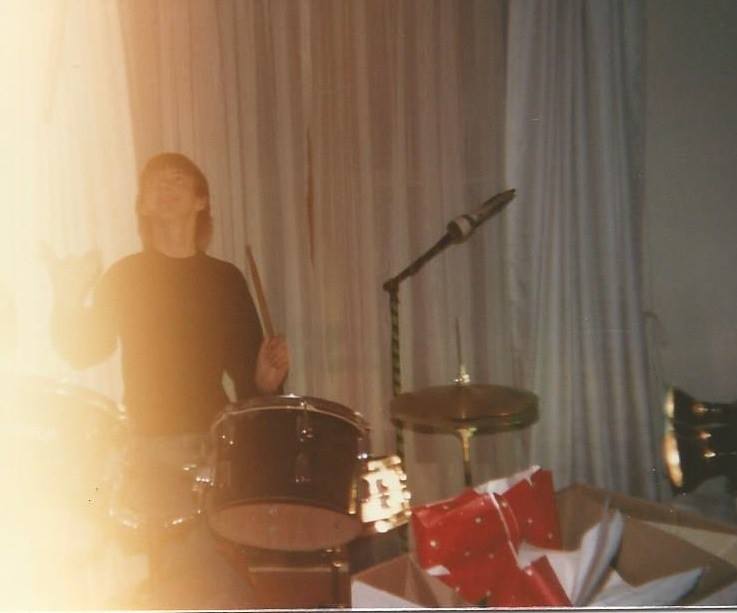
Do I still cry? Absolutely. But today we will celebrate Jon’s life with pizza and greasy cheeseburgers and loud music, and I hope you all will do the same. Let those guitars riff and scream, and pound those drums until you break a head or a stick, and Jon will be grinning from ear to ear.

Jon pounding the drums in the dining room, circa 1985
Jon teaching himself guitar

Being Sick Is Expensive

Very very very irritated right now… Having auto-immune disorders is expensive when it comes to both money and time (and energy, but that’s another issue). My particular brand of rheumatoid arthritis involves the eyes, and sometimes steroid drops don’t bring the inflammation down, so the doctor has to pull out the big scary needle and jab me straight in the upper left quadrant of the eyeball to make it sit up and listen to the prednisone.

All of this inflammation, scarring, drops, and shots over the past 20 years caused me to develop cataracts super early. Cataract surgery is a piece of cake, and I highly recommend it over the alternative of feeling like you are looking through dirty dish water all of the time. But then a few years after cataract surgery, the membrane holding the fake lens decides to flake out, and the doctor has to thump your eyeball with a laser and bust up the party so you can see again. It’s painless, so no biggie.

What has me steamed today is that I have to see THREE DIFFERENT EYE DOCTORS for all of these shenanigans. I see an optometrist for my glasses (cataract surgery gives you a choice between a far distance lens or a near distance lens, and there is no switching it up without glasses for the option that wasn’t picked). But if my eye gets angry, the optometrist ships me over to the retinal ophthalmologist who has the big scary needle. And if I need the laser, the retinal ophthalmologist and the optometrist tell me I have to make an appointment with this other specialized ophthalmologist.

So I called up the specialized ophthalmologist’s office and told them I was being sent there to get my right eye lasered (already had the left done years ago). They said no problem and set me up with an appointment today. I knew it is only one eye and they wouldn’t dilate both eyes, and I would be good to go as far as driving. Ha.

Get there and the assistant promptly runs me through a full exam and dilates both eyes. At that point, I’ve figured out this has all gone south. The doctor and his nurse could tell even with my mask on when they walked in that I was glaring daggers. I told them again that my retinal ophthalmologist and optometrist had sent me back to them for lasering of the membrane–that’s it. Doctor scrambled out of the door (after confirming that yep, that membrane is too murky to see anything through) and went to confer with others in the business office–came back and said that insurance won’t allow it to be done the same day as an exam. Naturally. It won’t even be 2 visits; no, it will be 3 because there has to be a follow-up. I got my next 2 appointments set up and left.

What has me so steamed is that 1, there truly was no need for an exam when they could have called the other 2 eye doctors I see who would have confirmed that yes, it needed it to be done and all of the updating of medical history could have been done via mail prior to my coming in for the laser, 2, I got to drive home with dilated eyes, and 3, this will be billed for 3 appointments and co-pays and all of that other expensive fun stuff. And since it is a specialist, it won’t be the cheap co-pays and office visit charges, and since the lasering now has to be done in the surgery center downstairs instead of in the regular office, it will also be a charge for surgery-related expenses.

It’s annoying enough to have to see so many specialized doctors all of the time for auto-immune disorders–at least I can usually keep those down to 1-2 times a year, even though it does add up when you realize as the years go by and more issues crop up that you are seeing a different person for almost every body system you own. Rheumatologist, pulmonologist, cardiologist, optometrist, ophthalmologist, physical therapist, podiatrist, dermatologist or plastic surgeon (depending on the severity), endocrinologist, ENT. It’s ridiculous, but 100% necessary, and that is annoying.

The only saving grace today was that it was stormy and there was no sun to complicate my driving home. At least the universe tossed me one favor out of all of this.

“I swear, as God is my witness, I thought turkeys could fly”

Thanksgiving in our family was not complete without watching or remembering the WKRP in Cincinnati episode where turkeys bombed the parking lot and mayhem ensued.  Our family loved those types of shows, just as we were also huge fans of the National Lampoon’s Vacation movies and would frequently reference them.  That’s just how we rolled.

As we celebrated another holiday yesterday, my thoughts were filled with Thanksgivings past.  I remembered the dinners we held for extended family at our home out on the farm.  We’d line up every table available, and they were not all the same height, but they stretched from one end of the dining room to the other.  We covered them with table clothes that only came out for holiday dinners, and we pulled out Mom’s collection of real silverware and set each place.  Relatives from around the area would start pouring in, patting my and Jon’s heads and handing us their coats to go lay on Mom and Dad’s bed.  We’d line up on both sides of the table and eat ourselves stuffed and visit for several hours. Sometimes we’d celebrate Thanksgiving in town at the McCall grandparents’ home. I always wanted to sit in the corner on the window bench, but if there were too many guests, we’d go sit in front of the large picture window at the kids’ table.  One year, both grandpas managed to burn me.  We spent the day at the Bieker grandparents and I rode in the truck with Grandpa and Dad to the end of the property to look for something in the barn.  I was riding in the floorboard at my grandpa’s feet as he smoked, and he let the ash grow too long before flicking it, so it dropped into my hair and he had to slap the top of my head to put me out.  Then we traveled to the McCall’s for Thanksgiving, and as Grandpa McCall was passing the gravy, he managed to spill the scalding liquid on me.  Fun times.

When I got older, it was not always possible for me to spend the holidays with my nuclear family.  When I went to college, my parents were in the midst of recovering from a bankruptcy and relocation to eastern KS.  In 1987, Dad was already living in Topeka trying to find work, while Mom finished up her school year in WaKeeney and also worked every shift she possibly could as a waitress.  That Thanksgiving, I drove a couple friends to Topeka so they could spend Thanksgiving at their extended family’s home, but first we attended a KISS/White Lion concert, which was amazing.  I went with my dad and Grandpa Jim and Granny to a community Thanksgiving dinner, and slept on the floor of the trailer that Dad was living in at the time.  It wasn’t the best night’s sleep, since there were cockroaches keeping me company, but at least I was with one parent  for the holiday.

Later in my college days, Mom had finally been reunited with Dad in Topeka, and Jon was living in Wichita or Topeka by that time.  I was still going to school in Hays, and I didn’t have the most reliable transportation.  It just wasn’t possible for me to drive to be with my family, and I usually had to work the holidays, since kids in college get stuck with the holiday shifts as low men on the totem pole.  That’s when my friends stepped in as my family.  One year, I worked the graveyard shift at the convenience store and then slept in the backseat as Connie and Harley drove us up to Phillipsburg to celebrate Thanksgiving with Harley’s family.  Other times, we’d trek to Great Bend to spend the holiday meal with Connie’s family.  I celebrated with Myrna’s family in Salina and in Hutchinson other years.

Getting married usually creates a whole new dilemma to the holiday celebration–“Who do we spend it with?”  My family has never really gotten hung up on the whole “it HAS to be celebrated on the actual holiday” concept–we just gather and celebrate when it works for everyone’s schedule.  This has helped avoid most of these conflicts between spouses.  In my first marriage, I married into a family who didn’t celebrate Thanksgiving for religious reasons, but we did still gather and have turkey and all the trimmings, because many of us were off work and all of those food items were on sale that week, so why not?  I have never seen anyone pick a turkey clean of meat as thoroughly as they did as they salvaged every bit to freeze for later meals–I am still amazed at their talent.  In my second marriage, I married into a family that DOES celebrate on the holiday, so my family just celebrates on another day and we have two Thanksgivings.  We’re flexible, which helps considerably.

I’ll be 48 years old in a few weeks, and I’ve only hosted Thanksgiving in my home twice.  The first time was when we lived in Stockton, and we tried to bring both sides of the family together to have one Thanksgiving.  We had mixed success–both sets of grandparents attended, but the siblings were not able to make it.  The second time was when we moved to Scranton, but only my side of the family was able to attend due to the travel involved.  We haven’t hosted Thanksgiving at our house for years now, since we have 5 cats and family members with cat allergies.  Hives are not good eats.  One year we had Thanksgiving at Jon and Becky’s, which was really cool, seeing my brother all grown up and hosting a family dinner.  I think he was a nervous wreck, but he hid it well.  Sometimes we decide to skip all the work involved in Thanksgiving dinner, and we all opt to attend one of the community dinners–no preparation, no clean-up, easy and efficient.  But most of the time, we hold Thanksgiving at my mom’s house.

There have been years when we didn’t know how we were going to fit so many people in Mom and Dad’s house–usually the adults crowded around the table in the kitchen, and the kids all ate out in the living room either at card tables or on tv trays.  This year, our family has grown much smaller.  We no longer share our holidays with Grandpa Jim and his roommate Bob, Dad, and Jon, even though we know they are there in spirit and always will be.  We had no trouble fitting the nine of us around the table this year, including one of Tambour’s new friends from college.  Every year the faces around the table change a little, as we “adopt” new people into our little family.  I’m glad to see that my kids welcome their friends to our holiday celebrations just as my friends welcomed me when I was that age.  Friends do become family, and I think that is a great part of holidays.

I also thought about what future Thanksgivings will look like.  Our kids are getting to the age where they are finding those special someones.  This year it didn’t work for the loves of their lives to join us for Thanksgiving, due to work and scheduling conflicts with their family celebrations.  But I am hopeful that in the future we’ll be able to find a way to include them with our family, because their absence is noticeable and they are missed.  I am hopeful that we can be flexible so they never feel torn between spending time with their family and ours.  I am hopeful that there is never a feeling of competition for their time, only a feeling of inclusion.  I look forward to many more celebrations with our family, and all of the memories that come with those celebrations.

LOST: One sister

Jon_1971
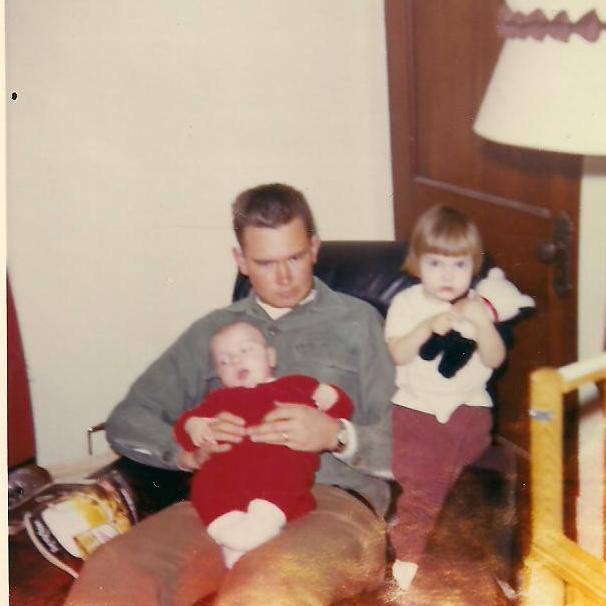
Jon, Don, and Andrea, 1971

46 years ago today, I became a sister.  I was 20 months old at the time, so as far as I am concerned, I don’t remember life without my little brother.  He was always there–until January 9, 2015, when he was not.  With Jon’s death, I was suddenly faced with an identity crisis.  He was my only sibling, so could I now truthfully declare myself anyone’s sister?  How do I answer when someone asks me if I have any siblings?  When Facebook is spammed by people posting about celebrating sibling week, happy sibling   day, “share if you have an awesome sister/brother!”, am I allowed to feel awesome?

My worst nightmare was always that we’d lose Jon.  He started out life in a rough way, being born with a cleft palate and cleft lip.  This meant years of surgeries, weeks of hospital stays and recoveries, and monthly trips to Kansas City to KU Medical Center for check-ups with specialists.  Jon was bullied by other kids because he looked different and talked oddly until all of the speech therapy paid off.  Our parents always stressed that we needed to be careful around him and not bump him or do anything that caused injury to his face and surgical sites, and they reminded me often to look out for him.  This was not an easy task, as Jon was a risk taker.  He liked to trek around our town or farm by himself, and this was before the days of cellphones; there would be no way for us to know if he was injured or bit by a snake or lying bleeding in the pasture after wiping out on his bike or go-cart or motorcycle.  All of this added up to my being very protective of my little brother.  I spent many hours of my life worrying about his safety and well-being.  I’d wake up in a cold sweat after having nightmares of receiving a call or visit from police telling me something had happened to him.  When Jon became an adult and journeyed into the world, he would go weeks and sometimes months without contacting anyone in the family by letter or phone.  We would have a general idea of where he’d been living last, and we would hope he would send us updates on his address changes, but there were no guarantees.  He was capable of moving himself, and he did frequently, so he didn’t need to call us to help him when he relocated.  Mom and I would talk on the phone, wondering if he were OK, and knowing that it was out of our hands.  It was a very helpless feeling.  Jon got better about checking in after Mom called the police and had them do a welfare check on him after he’d been out of touch for too long.

Eventually, Jon grew up and set aside his more risky behaviors.  He stayed in regular contact with us.  Technology played a huge part in this.  All he had to do was fire up his computer every day and send us IM’s or emails.  Chatting with my brother every day was a part of my daily routine.  We didn’t have a set time to do so, but I knew if I sent him a message, he’d respond before the day was out.  He was a great sounding board.  I could talk to him about anything that was going on in the world or our lives.  I really miss that.

Since Jon died, I’ve had to learn about sibling grief.  What I’ve learned from reading and talking to others online is that we are sort of a forgotten category of grievers.  When someone dies, everyone instinctively reaches out to comfort the parents and spouses and any children they may have had.  But the siblings are an afterthought.  We hear a lot of “Be strong for_____; losing him/her is devastating for them.”  Well, yeah.  The aftershocks of grief are not only experienced by parents, spouses, and children.  There are not many books or websites for dealing with sibling loss, but it’s a real phenomenon.  It is a lost of your shared history.  Jon and I did everything together, when I stop to think about it and our childhood.  We weren’t literally together 24/7, but in all the important memories, we shared them.  Now I have no one to walk down that memory lane with, no one to turn to and say “Hey, remember when…” and laugh and smile.

Today is what would have been Jon’s 46th birthday.  It’s been probably over 30 years since I physically celebrated Jon’s birthday with him, but it is hard to see birthday cards in the store that would have fit him perfectly and not have a reason to buy them.  It is hard to see a gift that would have made him smile and have to pass it by.  It’s hard to figure out how to celebrate Jon when even happy things make me cry.  There’s a concert happening nearby tonight that I want to attend.  It is a “Monsters of Mock” concert with impersonators of 3 bands that we listened to; we both saw the real bands when we were younger, so I know he would have gotten a kick out of it.  It’s always surreal to attend concerts without Jon, since we always went together when we were teens.  When we became adults, he left me behind and attended them on his own since I was too busy with college and jobs and kids and all that mundane stuff, so he saw bands I never got to see.  I’m glad he got to see them and have a great time.  Jon was all about living life on his own terms, and he did it well.  I am proud of how much life he put into the 44 years he was alive, and I will always be proud to have been able to call myself his sister.

Traditions

Traditions.  Those patterns of behavior that carry on through time and provide a comforting structure to one’s life.  I grew up thinking that traditions were everywhere, but I have since discovered that they have to be nurtured and honored by the community or they will never take root and live on for generations.

Granted, communities are perceived differently by natives and by transplants.  Transplants do not always see local events the way that people do who have grown up there.  I am a transplant where I live now.  So in my opinion as an outsider, the town I live in currently, Scranton, has not found its traditions that embrace the entire community.  There have been attempts, such as the “Saturday in the Park” event, that is the last Saturday in June, but it is a glorified family reunion that uses city funding.  A few families gather in their lawn chairs and visit and have a cook-out, a couple vendors set up their tents (sno-cones and t-shirts), there are a couple blow-up rides, there’s a sand volleyball game, and it all ends with a fireworks display.  But few people attend, and the attendance has grown smaller and smaller.  Now the event has been retitled “Liberty Days” or some such thing.  Another group is trying to establish a new event, “Bubba Day” to honor a fellow in their family who died much too young.  It is a couple weeks before the other event, and most of us in town aren’t aware of it until we are startled awake by a 10 PM fireworks display out of nowhere that sends pets and small children scrambling for safety.  There is something called a “Marathon”, which is a 2 or 3 day around-the-clock softball/baseball tournament; it draws all the softball/baseball fans from surrounding communities, but it again is really only of interest to those who are into that sort of thing.  When your town only has around 750 people in it, and you can only get 10% of the town onboard for an event, attendance is pretty paltry.  I think this is simply a hazard of being a bedroom community; few people work in the community and only come home to sleep before driving the next day to another town for work and entertainment.  There is a real disconnect among residents here.  When we first moved to this town, the city council members were trying to find ways to combat this and bring the community together, but that effort has dwindled away.  Pockets of people try to make a difference, but it is not embraced by the community as a whole.  The community is very passive when it comes to making changes.

The town I was raised in, WaKeeney, has traditions.  It has traditions that are still alive and well today that I experienced when I was a kid there 30+ years ago.  How do I know this?  Social media, of course.  I’m still friends online with a number of people who continue to live in WaKeeney, and I can see their traditions through their posts.  WaKeeney is not a huge town; it was roughly 2500 people when I lived there, and there are around 1800 people living there now.  But at any given time of the year, everyone in that town knows what is going on whether they participate or not personally.

It is a farming community, and you know when it’s sale day at the sale barn–the wind always catches it just right and fills the town with the smell of cow pies.  You don’t have to be a farmer or someone buying and selling livestock to go to the sale barn and eat some great food and delicious pie on sale day.  And during the summer wheat harvest, it seems like everyone is called to action.  You are either on a combine or driving a truck to the grain elevator and waiting in line with dozens of other drivers, or you are hauling coolers of water to the custom cutter crews and bringing homecooked meals to the field several times a day.  Everyone sits on the tailgate of a truck covered in dust and sweat, eating and drinking and watching the skies for rain clouds and discussing the quality of the harvest.  If you are not actively participating in the harvest, you are driving at a leisurely pace behind mammoth farm implements.

During the winter months, everyone knows the high school kids are going to be selling boxes of fruit or nuts or greenery as a fundraiser.  And everyone knows WaKeeney is the Christmas City of the High Plains.  The lights are strung throughout downtown, the real greenery is spiraled up the metal framework, and after Thanksgiving there is a community lighting ceremony with caroling and hot cocoa and the season comes alive.  After I moved away, they added to the tradition; there is now a spot on Main Street that is permanently decorated as the North Pole.  The boy scouts sell Christmas trees, and the whole town celebrates the season.

Every Fourth of July, we would trek into town from the farm, even though we could see the display from our front porch.  Everyone would gather in the early evening for free watermelon at the fairgrounds.  The long tables would be set up at the grandstand entrance and volunteers would be slicing watermelon into wedges and handing them out to everyone.  Talk about a wet sticky mess–the juice was running down our arms and the ground was littered with black seeds as we swatted the flies away.  Then we all walked into the grandstands and found seats and watched the fireworks display.  It may not have been the whole community, but it was pretty close as the grandstands were filled with people oohing and ahhing at the fireworks.

Right now it’s fair season.  All the hard work the 4H kids put in all year has finally paid off.  They get to bring their exhibits to the fairgrounds and compete for ribbons.  The buildings have been swept out and cleaned up by volunteers who put in long nights.  Floats have been constructed; back in my day, we met for weeks and pushed tissue paper through chicken wire to create our floats.  One year our float was a giant slice of watermelon.  Kids are busy decking out their bikes with streamers for the big parade and hoping they don’t get put behind the horses this year.  All of the 4H groups are creating booth displays; so many years my Barbie dolls were recruited to provide some people for our displays.  Even non-4H people are excitedly bringing their exhibits.  Plates of fruits and vegetables fresh from the garden are set up on tables.  Small vases of fragrant flowers are lined up in rows in the flower booth.  Needlework is resting in glass cases.  Soon the carnival will arrive in town and the fairgrounds will be filled with lights and sounds and black cables snaking along the ground as carnies call out to everyone walking by to come and play their games and ride their rides. The barns will be filled with laughter and blowing fans and cows chewing their feed and swishing their tails as kids try to groom them and get them ready to be shown.  Kids will be reaching through the slats of the pens to pet the sheep and running through the pig area pinching their noses closed.  Outside on the concrete slab animals will be getting showered to remove any mud and muck.

Traditions are important.  They give people a sense of security.  There are things people can count on.  Do traditions stay the same?  No.  I know if I were to go back to my hometown, there will be changes to the traditions.  Some parts of the traditions have been let go, others have been improved.  But the important thing is that the community comes together and reminds each other that they are just that–a community.  I can only hope that each new generation understands and honors the traditions that create their community.

The “New Kid” Effect

Week 3’s blogging prompt is “write about what is happening around you.”  There’s not a whole lotta shaking goin’ on around here at the moment, so I am dusting off a draft.

Some people spend their entire lives in the same community.  They are born there, they grow up there, they return there after college (unless their community has its own college), they marry and raise a family there, and they are buried there.  There is a security that comes from that sort of continuity in one’s life.  There is a foundation that is hard to shake when you belong somewhere.  “There’s no place like home” means something to you.

But some people don’t have this experience.  Some are military brats, moving from post to post as their parents serve our country.  They end up with a life rich in cultural experiences, and they collect friends from far and wide.  Social media has made it easier to maintain these friendships, unlike back in the snail mail days.  Social studies and geography lessons are a bit more meaningful to people who have traveled all over the country or the world.  What they lack in roots, they can make up in diversity.

Then there are those people who don’t make moving a lifestyle, but they move to a different town when their parents change jobs or other circumstances make moving necessary.  They are forever known as “the new kid,” even if they never move again.  They could live in their new community for the next thirty years, and there would still be situations where they were reminded that they weren’t born there.  But it may have something to do with when this move occurs.  The earlier in life that a person moves, the better their odds of being accepted as a local.

I vaguely remember moving from my birth town of Salina to Glasco.  I was only two years old when we moved.  But I was accepted in Glasco.  I made friends, had playdates, and transitioned well into school and was at the top of my class, if there could be such a thing in first grade.  I belonged.  My parents, however, were outsiders in the community, and it was difficult for my dad to maintain an auto repair business; when my mom managed to alienate the entire town by pushing through a bond to build a city pool (which the town is very proud of now, I might add), it was time for us to literally pack our bags in the middle of the night and get out of town.  Initially, we were supposed to stay with my paternal grandma and have a mobile home installed on her property, but zoning laws said otherwise.  My parents needed to find us a home quickly–it was December and cold and snowy, so we couldn’t live in the army tent that we had spent the summer in; we needed an actual house.  Since my dad’s hometown was now out, they turned to my mom’s hometown, WaKeeney.

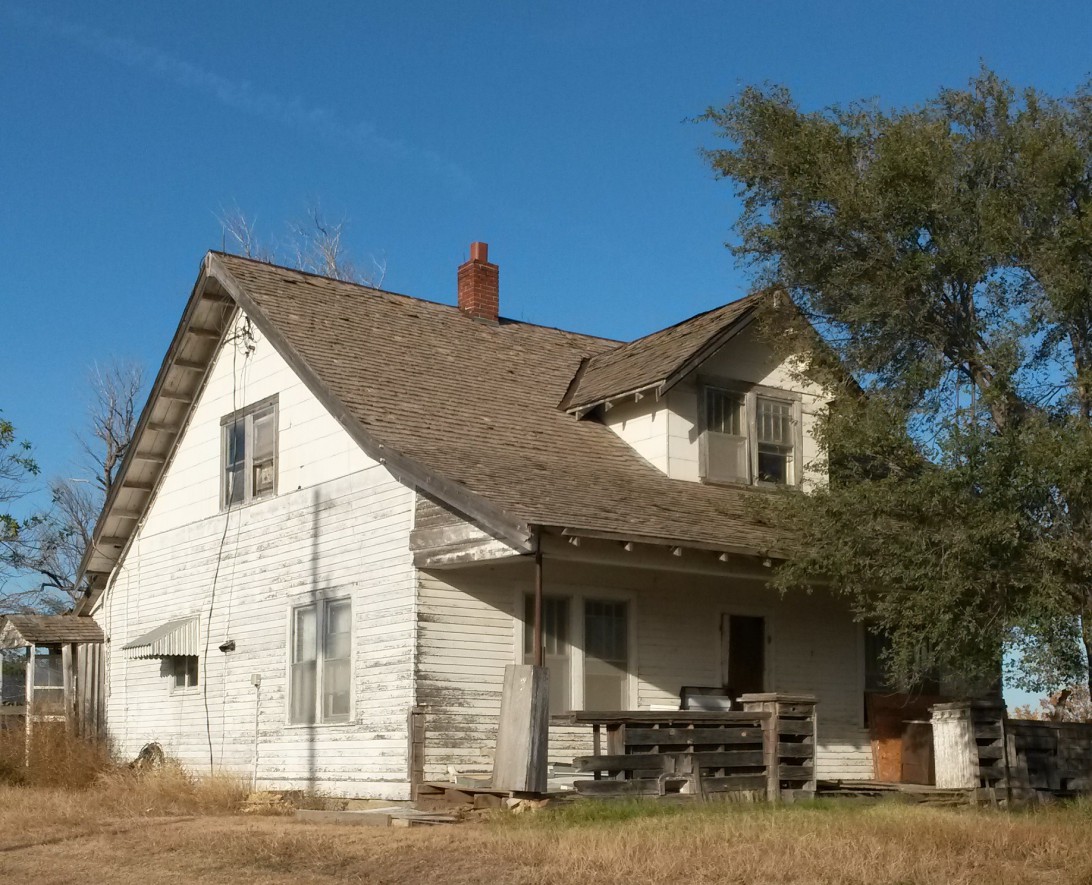
Even in WaKeeney, we were starting out as the new kids of new kids–my mom had arrived in WaKeeney in the early 1950’s after her parents divorced in Dodge City and her mom remarried a WaKeeney native.  Mom was not only a new kid, but also a stepkid.  While my step-grandpa was from a well-established family in the county, Mom was still his step-daughter, so not entirely accepted as a local by association.  Grandpa raised Mom and her siblings for a number of years, and he was always “Grandpa” to me whether by blood or not.  When we moved back, it was my great-grandparents’ home that we moved into, and we helped Grandpa on the family farm.

Mom had graduated from WaKeeney, so returning there provided her with some leverage to be accepted as a local.  She had returned, and this meant something.  She knew the people in the community, and she knew the connections that come from putting down roots in a town.  If you don’t know who is married to who and who is third cousins with the waitress at the diner, social mayhem can ensue with embarrassing results.  Knowing connections is important.

This time, I was 7 years old when we moved.  I don’t know if it is the town that made the difference, or the age, but there was a difference.  Apparently I had missed the pivotal acceptance ceremony by one year–the kindergarten play.  I was in first grade, but my classmates were still talking about that kindergarten play.  Heck, they were still talking about it our senior year of high school.  I had missed being part of it, but I learned all about it.  My class had performed Little Red Riding Hood.  I knew who played what part, and interestingly, the more important the part played determined one’s place in the popularity hierarchy.  This fascinated the people-studying part of me.  I heard all about who said what, who forgot their lines, who knocked over part of the scenery.  My classmates would reenact the play during recess.  For several years, “What part did you play in kindergarten?” was a standard question–when I would reply that I had moved here in first grade, there would be an awkward “oh…” and then the cold shoulder would begin.  My brother was in kindergarten when we moved, so the teacher quickly found him a part in that year’s play; he wore a little yellow shirt and sat in front of the fake fireplace and swept it out during the play.  So Jon was spared the ordeal of not being part of the kindergarten play when we moved; I’m not sure that it completely removed the “new kid” stigma, but at least he had an answer when asked what part he played.

Something interesting happened shortly after I moved to WaKeeney.  We would occasionally have visitors.  Most of the time, it was cousins of classmates who were visiting from out of town.  But one day it was Roger.  Word had gotten around that Roger would be visiting, and my classmates were all abuzz.  I wasn’t sure what the big deal was, being a new kid and all.  Finally I asked one of my classmates who Roger was.  Roger had been a student in our class in kindergarten, and he had played one of the important roles in the play, so he was up there on the popularity hierarchy.  But he had moved away before I arrived in January of our first grade year, which is why I didn’t know him from Adam.  The day Roger showed up to visit, my classmates pretty much swarmed him in front of the bulletin board by the classroom door.  It reminded me of fans greeting a rock star.  After the visit was over, my classmates talked about Roger for days.  The next year, Roger moved back and rejoined our class.  Another new student who had moved here after me was puzzled over how quickly Roger had been accepted by our classmates, while we other “new kids” were still banished to the outskirts of society.  I explained to my classmate that Roger was not really new–he was the returning hero.

Would it make a difference if I were to move back to what was my hometown for 12 years?  I’m not sure.  My grandparents are long gone, and only a few of my step-cousins remain there. They are not cousins I was close to, we just knew we were on the same family tree but the branches were far apart.  A few of my classmates still live there.  I see their posts on social media, and I can see where I would have been able to participate if I were there.  I could have helped plenty with the PTO bake sale, baking and making posters and manning the booth.  I could have had kids going through the same religious education classes that I went through, but not in the same building thanks to Mother Nature and those pesky acts of God.  I could have had kids going across the same stage I crossed during my graduation.  My classmates knew my strengths, and I would not have had to toot my own horn when it came to volunteering to help with activities–they would know already that I can draw and help and be there for whatever needs to be done.  And my kids would have had friends near their own ages in the children of my classmates.  I would have known who was related to who and who slept with who when we were kids and now would make social situations awkward or not.  So even though I was always a “new kid” there, maybe in a generation or two we would have made it to “local” status.

My own kids have always been “new kids”.  Even if I had remained in the town we lived in when they were born, they would have been “new kids”.  The town I lived in when my sons were born did not have its own school–they would have been bussed to a town 10 miles away. The town we lived in when our daughter was born probably would have accepted all of the kids since they moved there when they were in kindergarten or younger, but we ended up moving when they were in elementary school.  So they spent the rest of their school careers as “new kids”.  We have now lived in our community 17 years, but we are outsiders for the most part.  I’m not sure where they will finally settle and establish their roots when they become adults, but I wish them well.  I admire that my kids have a knack for networking and “finding their tribe” when they move around.  It is a beautiful thing to watch.