The “New Kid” Effect

Week 3’s blogging prompt is “write about what is happening around you.”  There’s not a whole lotta shaking goin’ on around here at the moment, so I am dusting off a draft.

Some people spend their entire lives in the same community.  They are born there, they grow up there, they return there after college (unless their community has its own college), they marry and raise a family there, and they are buried there.  There is a security that comes from that sort of continuity in one’s life.  There is a foundation that is hard to shake when you belong somewhere.  “There’s no place like home” means something to you.

But some people don’t have this experience.  Some are military brats, moving from post to post as their parents serve our country.  They end up with a life rich in cultural experiences, and they collect friends from far and wide.  Social media has made it easier to maintain these friendships, unlike back in the snail mail days.  Social studies and geography lessons are a bit more meaningful to people who have traveled all over the country or the world.  What they lack in roots, they can make up in diversity.

Then there are those people who don’t make moving a lifestyle, but they move to a different town when their parents change jobs or other circumstances make moving necessary.  They are forever known as “the new kid,” even if they never move again.  They could live in their new community for the next thirty years, and there would still be situations where they were reminded that they weren’t born there.  But it may have something to do with when this move occurs.  The earlier in life that a person moves, the better their odds of being accepted as a local.

I vaguely remember moving from my birth town of Salina to Glasco.  I was only two years old when we moved.  But I was accepted in Glasco.  I made friends, had playdates, and transitioned well into school and was at the top of my class, if there could be such a thing in first grade.  I belonged.  My parents, however, were outsiders in the community, and it was difficult for my dad to maintain an auto repair business; when my mom managed to alienate the entire town by pushing through a bond to build a city pool (which the town is very proud of now, I might add), it was time for us to literally pack our bags in the middle of the night and get out of town.  Initially, we were supposed to stay with my paternal grandma and have a mobile home installed on her property, but zoning laws said otherwise.  My parents needed to find us a home quickly–it was December and cold and snowy, so we couldn’t live in the army tent that we had spent the summer in; we needed an actual house.  Since my dad’s hometown was now out, they turned to my mom’s hometown, WaKeeney.

Even in WaKeeney, we were starting out as the new kids of new kids–my mom had arrived in WaKeeney in the early 1950’s after her parents divorced in Dodge City and her mom remarried a WaKeeney native.  Mom was not only a new kid, but also a stepkid.  While my step-grandpa was from a well-established family in the county, Mom was still his step-daughter, so not entirely accepted as a local by association.  Grandpa raised Mom and her siblings for a number of years, and he was always “Grandpa” to me whether by blood or not.  When we moved back, it was my great-grandparents’ home that we moved into, and we helped Grandpa on the family farm.

Mom had graduated from WaKeeney, so returning there provided her with some leverage to be accepted as a local.  She had returned, and this meant something.  She knew the people in the community, and she knew the connections that come from putting down roots in a town.  If you don’t know who is married to who and who is third cousins with the waitress at the diner, social mayhem can ensue with embarrassing results.  Knowing connections is important.

This time, I was 7 years old when we moved.  I don’t know if it is the town that made the difference, or the age, but there was a difference.  Apparently I had missed the pivotal acceptance ceremony by one year–the kindergarten play.  I was in first grade, but my classmates were still talking about that kindergarten play.  Heck, they were still talking about it our senior year of high school.  I had missed being part of it, but I learned all about it.  My class had performed Little Red Riding Hood.  I knew who played what part, and interestingly, the more important the part played determined one’s place in the popularity hierarchy.  This fascinated the people-studying part of me.  I heard all about who said what, who forgot their lines, who knocked over part of the scenery.  My classmates would reenact the play during recess.  For several years, “What part did you play in kindergarten?” was a standard question–when I would reply that I had moved here in first grade, there would be an awkward “oh…” and then the cold shoulder would begin.  My brother was in kindergarten when we moved, so the teacher quickly found him a part in that year’s play; he wore a little yellow shirt and sat in front of the fake fireplace and swept it out during the play.  So Jon was spared the ordeal of not being part of the kindergarten play when we moved; I’m not sure that it completely removed the “new kid” stigma, but at least he had an answer when asked what part he played.

Something interesting happened shortly after I moved to WaKeeney.  We would occasionally have visitors.  Most of the time, it was cousins of classmates who were visiting from out of town.  But one day it was Roger.  Word had gotten around that Roger would be visiting, and my classmates were all abuzz.  I wasn’t sure what the big deal was, being a new kid and all.  Finally I asked one of my classmates who Roger was.  Roger had been a student in our class in kindergarten, and he had played one of the important roles in the play, so he was up there on the popularity hierarchy.  But he had moved away before I arrived in January of our first grade year, which is why I didn’t know him from Adam.  The day Roger showed up to visit, my classmates pretty much swarmed him in front of the bulletin board by the classroom door.  It reminded me of fans greeting a rock star.  After the visit was over, my classmates talked about Roger for days.  The next year, Roger moved back and rejoined our class.  Another new student who had moved here after me was puzzled over how quickly Roger had been accepted by our classmates, while we other “new kids” were still banished to the outskirts of society.  I explained to my classmate that Roger was not really new–he was the returning hero.

Would it make a difference if I were to move back to what was my hometown for 12 years?  I’m not sure.  My grandparents are long gone, and only a few of my step-cousins remain there. They are not cousins I was close to, we just knew we were on the same family tree but the branches were far apart.  A few of my classmates still live there.  I see their posts on social media, and I can see where I would have been able to participate if I were there.  I could have helped plenty with the PTO bake sale, baking and making posters and manning the booth.  I could have had kids going through the same religious education classes that I went through, but not in the same building thanks to Mother Nature and those pesky acts of God.  I could have had kids going across the same stage I crossed during my graduation.  My classmates knew my strengths, and I would not have had to toot my own horn when it came to volunteering to help with activities–they would know already that I can draw and help and be there for whatever needs to be done.  And my kids would have had friends near their own ages in the children of my classmates.  I would have known who was related to who and who slept with who when we were kids and now would make social situations awkward or not.  So even though I was always a “new kid” there, maybe in a generation or two we would have made it to “local” status.

My own kids have always been “new kids”.  Even if I had remained in the town we lived in when they were born, they would have been “new kids”.  The town I lived in when my sons were born did not have its own school–they would have been bussed to a town 10 miles away. The town we lived in when our daughter was born probably would have accepted all of the kids since they moved there when they were in kindergarten or younger, but we ended up moving when they were in elementary school.  So they spent the rest of their school careers as “new kids”.  We have now lived in our community 17 years, but we are outsiders for the most part.  I’m not sure where they will finally settle and establish their roots when they become adults, but I wish them well.  I admire that my kids have a knack for networking and “finding their tribe” when they move around.  It is a beautiful thing to watch.
Playmates

I just finished reading an article, The Saddest Thing About Living in Our ‘Playdate Society’, by Jennifer S. White.  It struck a chord.

When I was a little over two years old, our family moved to Glasco, a small town in North Central Kansas.  For the first few months, we lived in the south part of town in a duplex of sorts.  An elderly woman had converted part of her home into an apartment, and all that separated our area from her home was a set of double doors that my brother and I would sometimes spread apart half an inch to watch silently as she had afternoon tea with her friends.  Sometimes she would invite our mom and us to visit, so we would go around to the front door, and Jon and I would play with her Barrel of Monkeys game while she and Mom had tea or coffee.  This apartment was located across the street from the town park, so we had the opportunity to meet and play with the neighborhood kids who lived in this part of town.

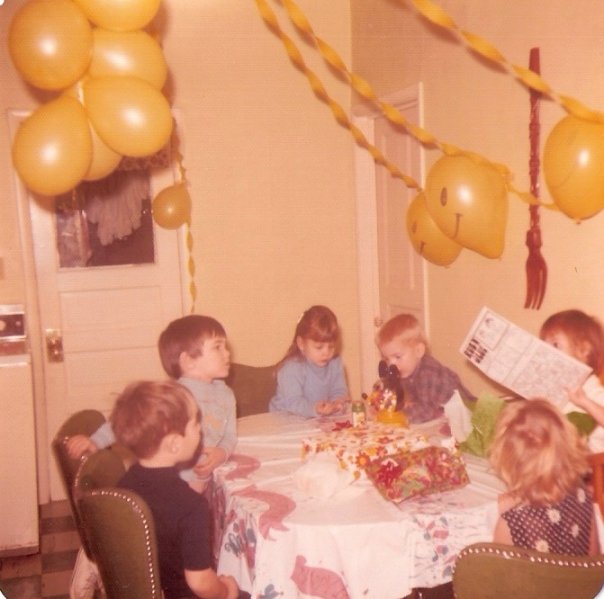
We soon moved to our own home in the north end of town, and this brought a new set of neighborhood kids.  Mom worked at the nursing home and sold Stanley home products, and Dad held various jobs as a county road worker, ambulance crew member, Lions Club member, and business owner when he opened his own auto repair garage downtown.  Mom and Dad were involved in the community, and they met many people through their hobbies and jobs.  These friends had children our age, so we had instant playmates.  The town was small enough that even moving to the other end of town did not extinguish our first friendships.  We kids could walk 2 or 3 blocks to our friends’ homes to play.  If Mom was worried, she could always stand on the porch and watch as we walked down to Greg’s or Darlene’s houses; when we reached our destinations, we would wave and she would go inside.  There was never a question of who would be invited to birthday parties.Glasco

On summer evenings, our parents’ friends would come over to drink beer or tea and visit, and all of us kids would play in the yard.  We’d push each other down the sidewalks in the wagon and play freeze tag.  When the sun went down and the streetlight came on, we switched to playing hide-and-seek and the “witching hour”.  Summer days were spent meeting our friends at the library for story hour.  All of the kids were placed by age in semi-circle rows, and we sat and listened to stories while our parents ran a few errands.  It always seemed odd to my brother and I that we were separated by age; our friends were a range of ages between 1-3 years older and younger than us, and we played with their siblings, too, so we were used to playing with kids who were not only our age.

When I was in first grade and Jon was in kindergarten, we moved to WaKeeney, my mom’s hometown in Northwest Kansas.  We went from being town kids to being farm kids.  Did this have an impact on our ability to have playmates?  You betcha.  The logistics of living miles out of town were difficult to overcome at that age; it got easier when we could drive.  We had a small circle of people to play with since the mom of our classmates babysat us after school and during the summer.  The babysitter’s neighborhood was our surrogate neighborhood when we were in town.  Our grandparents lived in town, and we spent quite a bit of time there, but there were few kids our age in that neighborhood.  WaKeeney was bigger than Glasco, so neighborhoods were more separated and didn’t mingle much.  Jon had the fortune to make a town friend, so he would have playdates with Michael, but my only friend was our babysitter’s daughter.  When we were home, there was one other child in the neighborhood.  Auby lived about a half mile down the road from us, and Jon and I would either walk down there or ride our bikes through the deep sand on the country road to reach his house to play.  Auby had a treehouse, and he had a grove of trees where we spent hours building forts.  Beyond that, Jon and I were pretty much on our own to entertain ourselves and each other.  If an activity required more than two people, it probably wasn’t going to happen.

The friendship world opened up quite a bit when Jon and I got motorcycles (scooters, whatever you want to call them–50-80cc, so nothing too powerful at first).  Now we had a way to collect friends from town and bring them out to our farm to play.  We knew the back roads of our corner of the county pretty well, since we often went to relatives’ homes with our parents.  We didn’t have licenses yet, so we couldn’t take the highway to town, but we could weave through the country roads to the north end of town.  Our friends’ parents would bring them there and we would hand them helmets; they climbed on the back of our bikes, and we rode back to the farm to race bikes or go-carts and play in the Saline River, exploring and floating on innertubes.

When our kids were younger, we lived in Stockton, a small town in Northwest Kansas.  They had pretty much the same set-up I had in Glasco, surrounded by neighborhood kids.  Our house was constantly full of kids, ringing the doorbell, grabbing drinks out of the fridge, needing band-aids after climbing trees.  We parents didn’t have to set up these playdates, which is a good thing, since we had no close friends with kids our kids’ ages; the playdates just happened because our kids were in close proximity to kids their age.

This changed when we moved to Scranton, in Eastern Kansas.  Scranton is smaller than Glasco, WaKeeney, or Stockton, but there is a less-secure vibe here.  I’m not sure if it is because the town is close to a city (Topeka), or because it is easy to pull up sex offender location lists now, or just my being paranoid as a parent.  Our kids had to get older before we could really feel safe letting them ride their bikes across town to play outside of our yard, and even then they needed to travel in pairs and not alone.  Our schools are consolidated with two other towns, and unfortunately, there are not too many kids our kids’ ages in our town; although there are 80-90 kids in their classes, there are maybe 3-6 kids their ages in our town.  There are only a few kids on our street, so play opportunities are slim pickings.

There are days when I wonder if it would have been better to move our family back to NW Kansas to one of our hometowns, simply for the friend/play factor.  But I look at my friends on Facebook from my hometown, and many of them no longer live in our hometown, either.  Those that do, do not have children my daughter’s age; her older brothers would have been set, but I started a family later in life than many of my classmates, so my oldest kids are the ages of their youngest kids.  Even using the tactic of parents’ friends’ kids being friends would not pan out for my daughter.

I will keep being hopeful that somehow we will find a way to build this circle of friendship that I grew up with, because I know it is important.  Until then, we will keep finding social activities for our kids through sports and youth organizations.  This will result in our kids developing friendships with people younger and older than they are, but that’s not a bad thing.  They may lack the spontaneous play activities that I grew up experiencing, but they will build a sense of community and belonging.

Farewell, Home Sweet Home

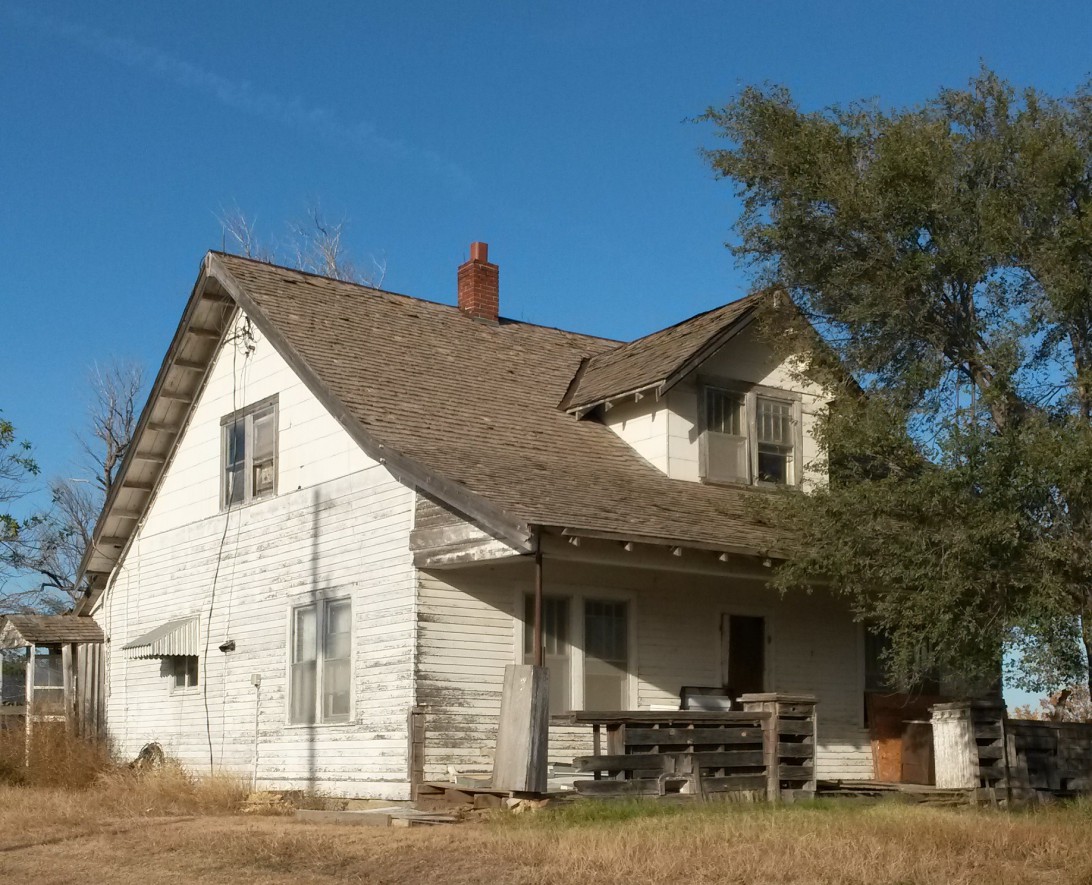
Last year, my aunt made the painful decision to sell her family homestead.  The McCall Homestead was purchased in the early 1900’s, and the house pictured on my page was bought from the Montgomery Ward catalog and built in 1917 by my aunt’s grandparents, my great-grandparents (step, but we don’t make that distinction in my family–family is family, period).  She offered the property to the two closest property owners, one a neighbor and one a cousin.  The cousin’s bid won, and we felt somewhat better knowing that the homestead would be staying in the family.

During the ensuing auction, I wandered around the property a bit and took a few pictures of my childhood home.  I’m glad I did, as the house is no more.  I wish I had taken more.  At some point after the auction, the cousin razed the house.  It was in a state of disrepair, and did need a lot of work.  The plumbing and wiring all needed to be updated, as they were still pretty much original to the house other than any work that my dad and grandpa did back in the 70’s and 80’s when we lived there.  Some of the plaster was cracked on the walls, and the porch was rotting and needed to be replaced.  The stairs to the dug-out basement could no longer be used, and windows had been broken.  The dinner bell by the back door had been stolen by a farmhand or vandals years ago, and the decorative wire fence around the yard had been removed.  Years ago, I tried to help my aunt apply to the state registry for historical sites and try to get a grant to restore the home, but we reached a dead end.  So the home silently sat there and wasted away.  The cousin dug a hole in the front yard where I spent many of my childhood days lying on the buffalo grass watching clouds drift by.  He knocked the home down and pushed it into the hole to be buried.

So my childhood home is gone forever, unless I win the lottery and buy the property someday and reorder the home and have it rebuilt.  Hey, I can dream, right?  But what will never be buried and gone are my memories of my home, where I discovered my love of dirt roads and peaceful surroundings.  I’ll share my memories here from time to time as they drift through my mind, and in this way my home will remain.