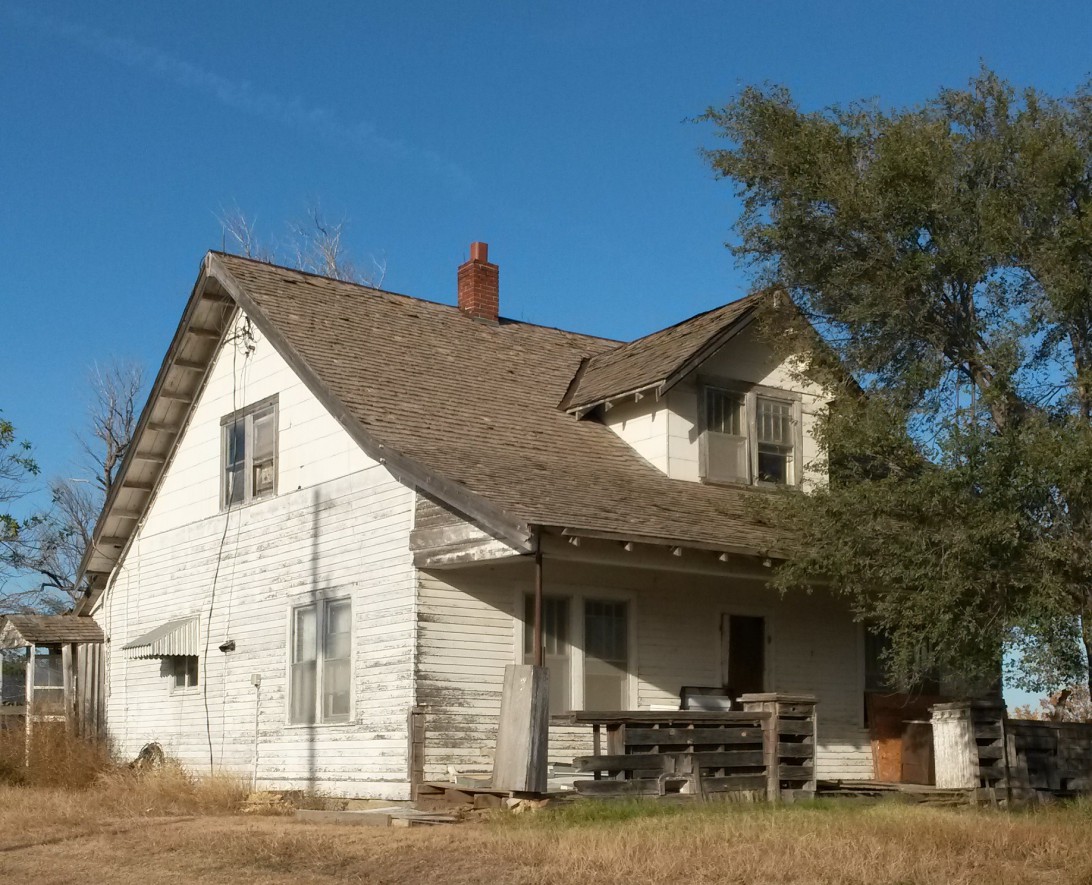
The other night we were watching the news and there was mention of suicide rates among farmers. My daughter looked from the television to me and asked, “Is that really a thing?” It was at this moment that I realized that my children have been raised far removed from the very agriculturally-focused rural environment I grew up in in northwest Kansas, and that history books gloss over or completely ignore the farming crisis of the 1980s.
Yes, it was and is really a thing.
Back in the 80s, quite a few factors played into the failure of family farms.
Drought was an ever-present threat that destroyed crops before they ever made it to market.
Foreign trade was also a threat to the family farmer. Our government was bending over backwards to kiss the hind ends of world leaders overseas by buying their crops to inject money into the foreign economies. This meant that our crops were worthless because there was too much surplus and that drove prices down. The government implemented a CRP program that paid farmers a small amount to plant a crop and then plow it under and show proof that the crop had been destroyed. I always thought that was really messed up. But farmers had no choice–they had to play along in order to get any money at all. It was a common joke that wives worked in town to support their husbands’ farming hobbies–but it wasn’t entirely a joke.
Farmers relied on banks to loan them money to buy the necessary equipment with the understanding that the loans would be paid with the profits from the crops. When the crops failed, the farmers didn’t have money to pay the banks. The banks then foreclosed on the farms and auctioned off the lands, livestock, equipment, and everything else the farmers could claim as their own.
And this wasn’t big, faceless corporations–this was your neighbor or cousin or father-in-law down the road. The farming communities are small and tightknit. Everyone is related or went to school with each other or all of the above. So when Farmer Joe couldn’t pay the loan at XYZ Bank in town, it was his second cousin on mama’s side calling him to let him know that the appraiser would be out next Tuesday to get a list for the auction notice. As you can imagine, people got pissed. There was one farmer who became known nationally because he got so mad that he didn’t take the notice lying down. He met the sheriff with a loaded gun and backed him right off of his property while it was still his property. He and others fought for their right to own their farms and not have their only way of life stripped from them.
But the auctions still happened. The lucky ones had their wealthier friends bid on their equipment and return it to them so they could keep trying to beat a living out of the land. The rest of the farmers just stood by weeping internally or outwardly as complete strangers descended like vultures and snapped up their equipment for dirt cheap prices. Corporations bought the land and divvied it up for development, ending family homesteads that were founded a century before.
And the suicides started picking up speed. At first it was sporadic and could be written off as at outlier. But soon it became apparent that this was a true crisis in the rural farming community. If your dad or brother said they were going to go check cattle or see how the crop was coming along, and they didn’t return home by dark, you went looking for them and were scared about what you might find. It was an ever-present concern.
The farming crisis of the 80s hits close to home, because our family didn’t escape it. My dad was working for his in-laws on their family farm, and slowly buying his own equipment and livestock in anticipation of the time when my grandpa would retire and Dad would take over the operation as his own. But there were years of bad crops and bad prices and poor livestock, and also some underhanded dealings from people my dad thought he could trust. And in the end, he lost it all.
With the loss of the farm, Dad lost his purpose in life. I have always considered myself lucky that my dad didn’t become an alcoholic until I was a junior in high school, although I grew up around other family members who were alcoholics, so the damage was there. But until my junior year, I wasn’t living 24-7 with an alcoholic. Let me tell you, it is terrifying. The man I knew was a shell of himself and completely taken over with depression. He coped by drinking, and he was an angry drunk. He was mad at the world and mad at himself and everyone else. We knew when we came home and he was already sitting at the kitchen table with his vodka and Mt. Dew that we needed to just quietly walk through the kitchen and up to our rooms. If we were lucky, he was so far gone that he soon staggered off to bed and we could quietly come downstairs and find food. If not, he would call us back into the kitchen and start berating us about whatever he was fixating on at the moment. We made sure we got our chores done and stayed clear of him as much as possible. On the worse nights, I would lie awake for hours and worry that he was finally going to have reached the end of his rope. Because Dad loved his family, and in his mind, he would have thought it was doing us a favor to take us out with him. I didn’t particularly want to be part of a murder-suicide, so I spent a lot of nights praying and lying awake wondering what I was going to do if I heard him opening his gun cabinet and then coming up the stairs to our bedrooms.
Dad never got to that point, but I still consider his death decades later to be a suicide due to the farming crisis. Alcoholism is a long, painful way to die. Near the end, he developed varicose veins in his esophagus along with the cirrhosis of the liver and fluid retention. But he kept on drinking, taking in the poison that would kill him eventually. He quit for a few years, and I was very grateful for that–finally, my children got to know the grandpa that was the dad I grew up with. But it didn’t last, and he went right back to his slow march toward death and the release from all of his torment. He just wanted it to end, and I resented that attitude. I wanted my dad to enjoy living, not will himself to die.
It took him 28 years to reach his goal. 28 years is a long time to work on killing yourself. But he gave up on life when he lost the farm. Farming gets into a person’s blood and becomes their reason to exist. I watched all of the farmers around me struggle every year against the elements and sometimes just sheer luck that made or broke their bank accounts, and I resolved then and there to never marry a farmer. I couldn’t handle the risk and the constant stress. And watching my dad kill himself one glass at a time for 28 years did nothing to change my mind about this. Farming is necessary and I appreciate that there are those who still work hard to provide for our families, but I don’t miss it.
 dirtroaddoodles